

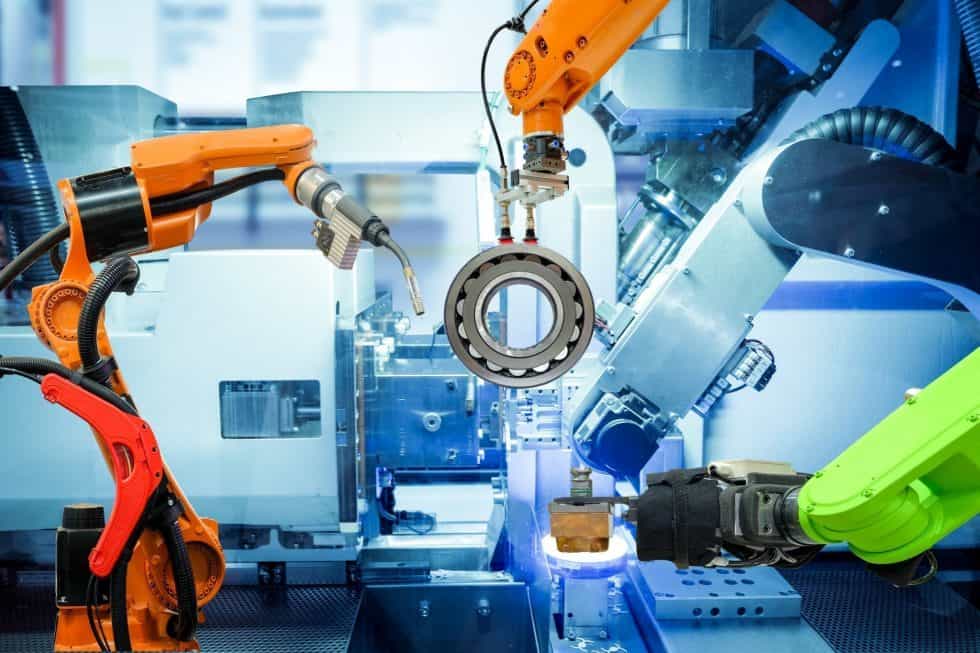
Productivity is key in the manufacturing industry to stay competitive and meet the ever-growing market demands. Industrial machines play a very important role in increasing productivity in an efficient and effective manner. In this article, we will discuss how industrial machines can contribute significantly to increasing productivity in various industrial sectors.
1. Automation of Production Processes
One of the main ways industrial machines increase productivity is through automation of production processes. Modern machines are equipped with advanced technology that allows for full or partial automation of various production tasks. With automation, companies can reduce reliance on manual labor, reduce human error, and increase production speed.
2. Consistency and Product Quality
Industrial machines are designed to produce products with high consistency and quality. This is very important in maintaining the company’s reputation and meeting stringent quality standards. By using the right machines, companies can ensure that every product produced is of the same quality, thereby reducing product defects and waste.
3. Energy Efficiency and Resource Use
Modern industrial machines are often more efficient in their use of energy and resources compared to manual production methods or legacy machines. Efficient use of energy not only reduces operational costs but also supports environmental sustainability efforts. In addition, machines that are efficient in using raw materials and reducing production waste can increase overall productivity.
4. Reduced Downtime
Machine downtime can be a major drag on productivity. Well-maintained industrial machines equipped with predictive maintenance technology can help reduce this downtime. Predictive maintenance technology allows companies to detect potential problems before they become serious, allowing for quick repairs and reducing production disruptions.
5. Increased Production Capacity
Industrial machines allow for significant increases in production capacity. With faster and more efficient machines, companies can increase their production output without having to significantly increase the number of workers. This allows companies to meet increasing market demand and expand their market share.
6. Adaptation to Market Changes
Flexible and programmable industrial machines allow companies to quickly adapt to changing market demands. For example, in the textile industry, automated weaving machines can be easily customized to produce different types of fabrics according to the latest fashion trends. This flexibility allows companies to stay relevant and competitive in a dynamic market.
Conclusion
Industrial machinery plays a vital role in increasing productivity across various industrial sectors. With automation, consistent quality, energy efficiency, reduced downtime, increased production capacity, and adaptability to market changes, industrial machinery provides significant benefits to companies. Investing in the right industrial machinery is a strategic move that can help companies achieve their productivity goals and remain competitive in the global marketplace. By making optimal use of industrial machinery technology, companies can achieve long-term success and sustainable growth.


