

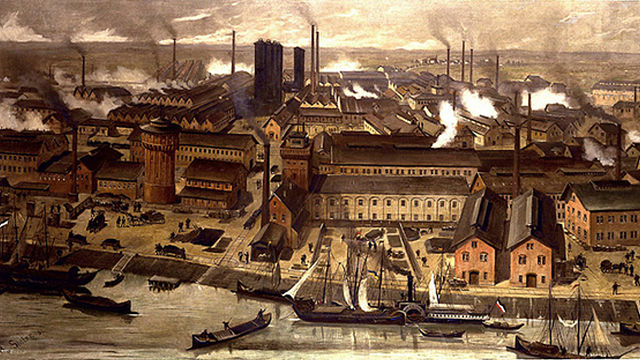
The Industrial Revolution was a very important period of history that began in the late 18th and early 19th centuries. It was a time when major changes occurred in the way we produce goods and manage industry, thanks to the introduction of new machines. These machines not only changed the way industry worked, but also the way humans lived as a whole.
Background of the Industrial Revolution
Before the Industrial Revolution, production of goods was done manually or with the help of animals. However, with the invention of the steam engine by James Watt in 1765, the industrial world underwent a major change. The steam engine made it possible to produce goods on a large scale and at an unprecedented speed.
Important Machines of the Industrial Revolution
- Steam Engine: As mentioned earlier, the steam engine was one of the most important inventions of the Industrial Revolution. It was used to power a wide variety of other machines, from textile machines to locomotives.
- Weaving Machine: The automated weaving machine made it possible to produce textiles in large quantities and with consistent quality. This drastically changed the textile industry and made clothing more affordable for many people.
- Spinning Machine: Spinning machines such as the Spinning Jenny speeded up the process of making yarn, which was essential for textile production.
- Locomotives: The development of steam locomotives allowed for faster and more efficient transportation of goods and people, paving the way for wider economic development.
Impact of the Industrial Revolution
The Industrial Revolution brought many positive changes, including increased productivity and efficiency, the creation of new jobs, and improved living standards. However, there were also negative impacts such as poor working conditions in factories, pollution, and the exploitation of child labor.
Conclusion
The Industrial Revolution was a turning point in human history that demonstrated the power of innovation and technology to change the world. The industrial machines created during this period not only changed the way we produce goods, but also the way we live and work. By understanding its history and impact, we can better appreciate the technological advances we enjoy today.


