

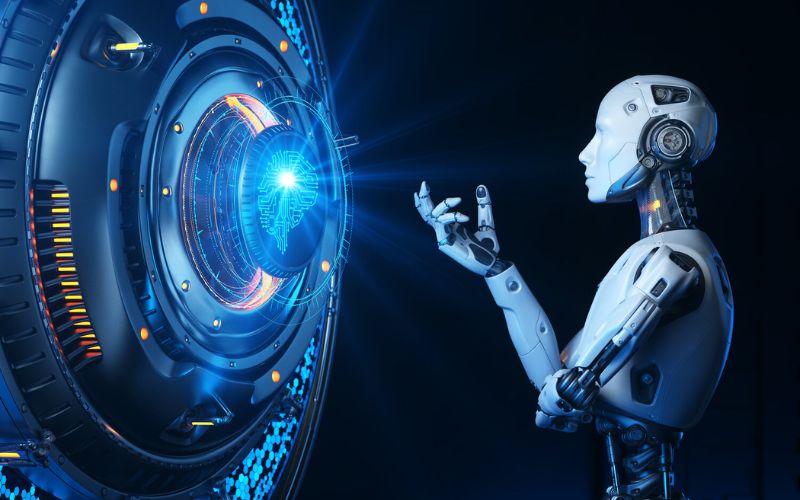
The manufacturing industry continues to evolve with technological advancements. Every year, new innovations are introduced to improve efficiency, productivity, and safety in industrial operations. 2023 is no exception, with a number of new technologies set to change the face of industrial machinery. Here are some of them:
1. Automation and AI
Automation and artificial intelligence (AI) technologies continue to play a significant role in the manufacturing industry. Industrial machines equipped with AI are capable of performing self-diagnosis, predictive maintenance, and real-time optimization of production processes. This not only improves operational efficiency but also reduces downtime and maintenance costs.
2. Internet of Things (IoT)
The Internet of Things (IoT) allows industrial machines to connect and communicate with each other over the internet. With IoT, data from various machines can be collected and analyzed centrally to improve efficiency and decision-making. This technology also enables remote monitoring and control of machines, providing greater flexibility in operations.
3. Additive Manufacturing Technology (3D Printing)
Additive manufacturing or 3D printing has revolutionized the way we produce industrial components. This technology enables rapid prototyping, production of complex components, and reduction of material waste. In 2023, 3D printing technology will advance with new materials and greater production capabilities, enabling broader applications in industry.
4. Collaborative Robotics (Cobots)
Collaborative robots, or cobots, are robots designed to work alongside humans in industrial settings. Cobots can assist with repetitive, heavy, or dangerous tasks, increasing productivity and safety. With sensor technology and AI, cobots can adapt and work safely around human workers.
5. Renewable Energy Technology
The awareness of the importance of environmental sustainability has driven the development of renewable energy technology in industrial machinery. The latest machines are designed to use renewable energy sources such as solar and wind power, and are equipped with energy efficiency features. This not only reduces the carbon footprint of the industry but also reduces long-term operating costs.
6. Augmented Reality (AR) and Virtual Reality (VR) Technology
AR and VR technologies are increasingly being used in the training, maintenance, and troubleshooting of industrial machinery. With AR, technicians can see repair instructions directly on the machines they are working on, while VR allows for operational simulations and risk-free training. These technologies help improve worker skills and reduce human error.
Conclusion
2023 brings many promising technological innovations in industrial machinery. From automation and AI to IoT and 3D printing, these technologies present huge opportunities to improve efficiency, productivity, and sustainability in the manufacturing industry. By leveraging these emerging technologies, companies can stay competitive and ready for the challenges of the future.


